
The surprising ways Parkinson’s can now be spotted years early
A wave of new breakthrough tech could detect the disease years – even decades – before major symptoms strike October 05, 2025 Parkinson’s is the fastest-growing neurological condition in the US, with 90,000 people now diagnosed every year alone – a 50 per cent jump since the mid-1980s. The picture is similar worldwide: a staggering 25 million people are expected to be diagnosed by 2050, more than double today’s figures. In short, it’s a big problem.
Armed with cutting-edge new gadgets, AI and a radically evolving understanding of how the disease manifests across the body, researchers are on the cusp of detecting Parkinson’s not years, but decades before symptoms appear in some cases.
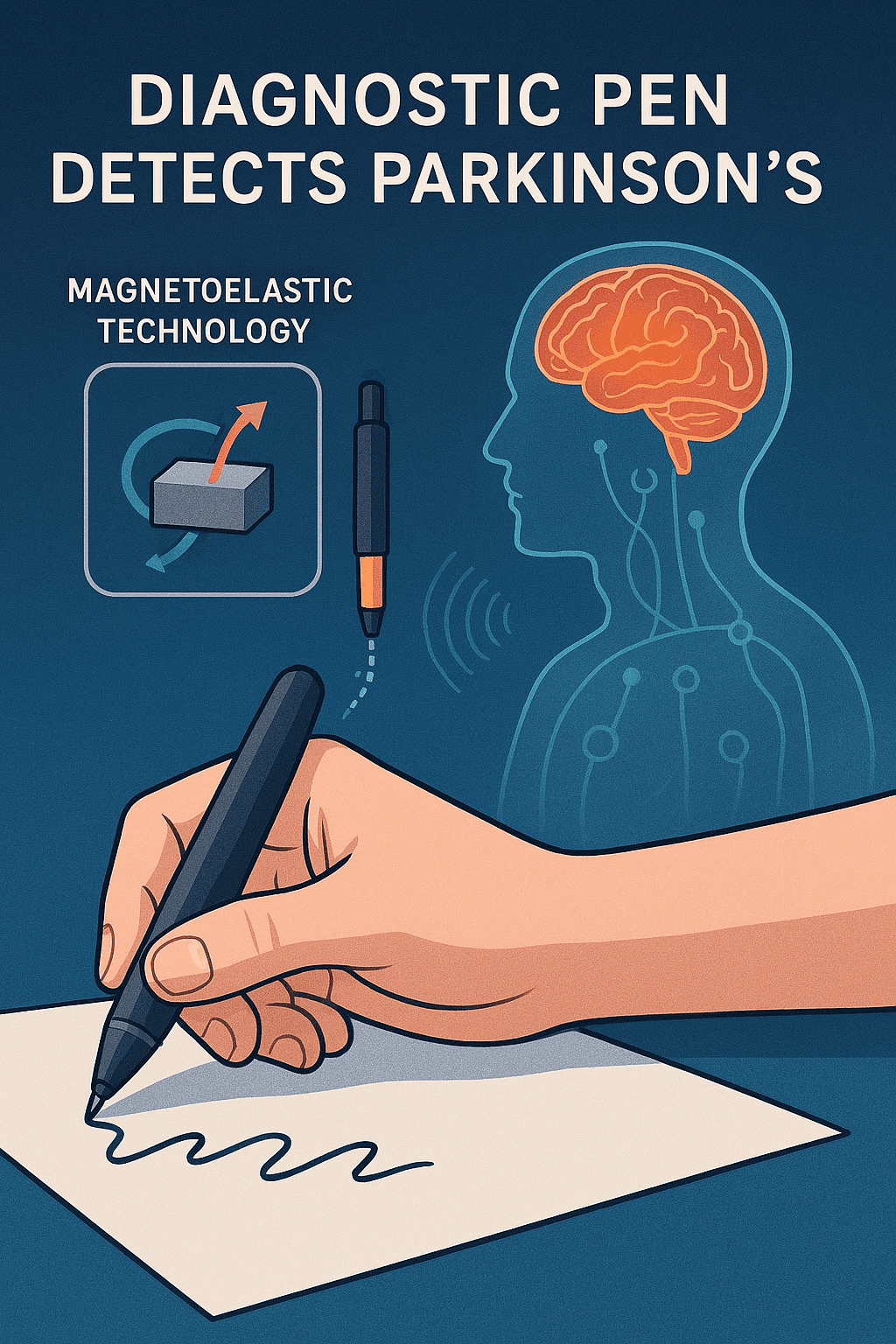
At the University of California, Los Angeles, Prof Jun Chen’s lab claims it has developed a diagnostic pen that can detect Parkinson’s disease simply by analysing how you write.
Its soft tip is made from a unique magnetoelastic material that shifts its magnetic field in response to pressure or bending. This effect, long known in rigid metals, was only recently discovered in soft polymers by Chen’s group, opening the door to new kinds of highly sensitive, body-friendly sensors.
“Using the magnetoelastic effect in soft materials is a new working mechanism,” Chen explains. “It is able to convert tiny biomechanical pressure, such as artery vibration, into electrical signals with high fidelity.”
The pen, which uses magnetised ink, captures both on-paper and in-air hand movements. It then sends this data to a computer, where an AI model analyses patterns associated with Parkinson’s motor symptoms.
Read in BBC Science Focus Magazine: https://apple.news/AAv03mzXnTvuAMbg2APet0Q


Recent Comments